


State of European Volunteering Report 2026
About SEVR2026


The 2025 Voluntaris Special Edition "Contemporary Volunteering Study and Research in Europe" developed in the framework of the European Coalition for Volunteering Evidence and Research (ECVER) coordinated by the Centre for European Volunteering (CEV) selected the measurement of volunteering as one of the five topics to be explored. The resulting article by Fonović et al. highlighted the inherent weakness in the fact that there is no comprehensive, up-to-date EU-wide data framework for harmonising sources on volunteers and their activities. The very same problem affects the other prioritary topics analyzed in the journal by writing teams composed of academics and practitioners: also legal frameworks and infrastructural support are inadequately mapped, which limits the visibility of volunteering’s contribution to EU objectives and weakens the evidence base for policy development.
As part of initiatives to address this deficit, CEV in 2026 will publish the first State of European Volunteering Report (SEVR2026), in collaboration with the Portuguese Volunteer Confederation (CPV) and with the support of the Calouste Gulbenkian Foundation (CGF). This report will contribute to a more comprehensive and complete understanding of volunteering in Europe. It will not be an index of country rates or types of volunteering, but rather a self-reflection exercise of the CEV members that will build on existing work to sustain future action. The already available information in the CEV European Volunteering Country Factsheets, the 2026 updates and additional Country Factsheets and the "Volunteering Infrastructure in Europe" country reports, compiled largely by CEV member organisations, represent the primary sources. Data and evidence on volunteering trends has been analysed together with information about progress in different European countries towards the envisaged outcomes in the Blueprint for Volunteering 2030 (BEV2030). Tapping into this existing practitioner knowledge provides a "picture of the whole" with useful benchmarks and indicators that are needed for the design of the policy responses that will enable volunteering across Europe to truly flourish.
Explore Country Cards





Belgium
Read more


_svg.png)

Poland
Read more





Spain
Read more


Meet The Scientific Committee

Dr Karin Y. Biermann
Dr Karin Y. Biermann is an independent researcher affiliated with the Business and Society Management at the Rotterdam School of Management, Erasmus University Rotterdam, the Netherlands. She has a diverse finance and management background, having worked in publicly listed companies through to small business ownership. New to the academic field, her research explores the lives of individuals who practice their occupation as volunteers, as occupation-related volunteering. Her work aims to deepen understanding of how occupational belonging, competencies, and resources intersect in voluntary occupational practice and social contribution across the life-course.
.jpg)
Jakub Dostál, PhD
He is a researcher and lecturer working at the intersection of public economics, philanthropy, volunteering, nonprofit organisations, and civil society. His research focuses on the economic value of volunteering, nonprofit management, philanthropy, and the role of civil society organisations in addressing social needs. He also brings practical experience from the voluntary sector, including as co-founder of the ADRA Volunteer Centre Brno, and serves as a member of the Czech Council for the Assessment of Reliability, an independent body deciding on the Seal of Reliability for public benefit organisations. Jakub is particularly interested in connecting rigorous academic thinking with real-world relevance, and in how individuals, communities, organisations, and institutions can make better use of their potential and resources.
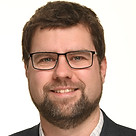
Dr Stuart Fox
He is a Senior Lecturer in Politics at the University of Exeter, based in Cornwall. His research focuses on youth political engagement, volunteering, democratic participation, and the inequalities that shape civic life. He has particular expertise in quantitative research, using large-scale survey and longitudinal data to examine how political attitudes and behaviours develop over time. His published work includes research on the relationship between youth volunteering and democratic participation, showing that volunteering can help reduce inequalities in political engagement among young people. More broadly, his work explores how social and political experiences in adolescence and early adulthood influence patterns of participation, and how evidence can inform efforts to widen inclusion in civic and democratic life.

Dr Jurgen Grotz
Jurgen is Director of the Institute for Volunteering Research, a Research Centre at the University of East Anglia in the UK. He is a published author and academic with over 35 years' experience of applied research across the academic, public, private and voluntary sectors. His largely interdisciplinary work about volunteer involvement has a strong focus on participative approaches and public engagement. His current research focus is on the role of volunteer involvement in strengthening democracies.

Dr Iwona Nowakowska
Iwona has a Ph.D. in Social Sciences, and she is a psychologist, and an Assistant Professor at Maria Grzegorzewska University in Warsaw, Poland. Using both quantitative and qualitative methodologies, she studies the role of individual differences, such as empathy, morality, and consideration of future consequences, in volunteering intentions and behaviors, both in everyday contexts and during crises (including pandemics, refugee crises, and natural disasters). She has been a P.I. of several projects funded by the National Science Centre, Poland, Polish National Agency for Academic Exchange, Polish Social Psychological Society. Currently a Section Editor at Voluntary Sector Review and Associate Editor at Current Psychology.